
Picking an e-commerce agency in Delhi is a total headache when you're just starting out. Every studio promises the moon. Web design, SEO, social media ads, hosting, maintenance, you name it. The real headache isn't finding a developer. It's sorting out what features you actually need right now from the overpriced fluff they're trying to upsell you on.
When you're starting out, your website can't just be a pretty digital brochure. It has one job: let a buyer land on a product, get what it is in five seconds, throw it in the cart, pay without the site crashing, and come back for more next month. That’s it.
If your developer cuts corners or builds a sloppy foundation on day one, expanding your store six months down the road is going to cost you double to fix.

What should a startup expect from an ecommerce website?
A new business does not necessarily need a complicated ecommerce platform. It needs a website that works properly for its current requirements and leaves room for future changes.
For example, an ecommerce website may need:
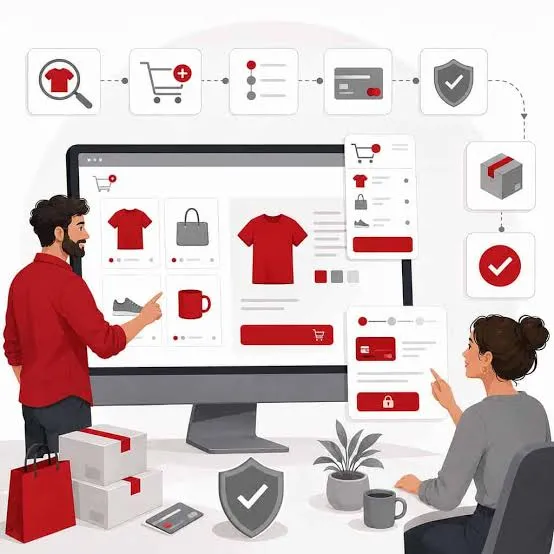
Product categories and individual product pages
Product images, descriptions, prices, and variations
Search and filtering
Shopping cart
Checkout
Payment integration
Order management
Customer account features, if required
Mobile-friendly pages
Basic security measures
SEO-friendly website structure
Analytics and tracking
Easy content and product management
What you actually need comes down to what you're selling and how you're running the business.
If you've only got a handful of products, a clean, basic setup will do the job just fine. When you're pushing hundreds of products with different sizes, colors, and weird shipping rules, a basic cookie-cutter site just falls apart. You need something built directly around how your business actually runs.
That’s why blindly copying a competitor's site is a complete trap. Their setup was built to solve their operational headaches, not yours.
Should you choose a ready-made ecommerce platform or custom development?
Have this conversation with your dev shop before you sign a single contract.
If your catalog is straightforward and you just want to get live without paying engineers to custom-code every button, use an off-the-shelf platform. Shopify or WooCommerce handles 95% of what you need right out of the box.
Don't look at a custom build unless standard platforms literally break under your use case—like you've got complex inventory rules or a weird checkout flow a template can't touch. Otherwise, you're just lighting cash on fire.
At the end of the day, it comes down to four things: what you're selling, what's actually in your bank account, how fast you're scaling, and whether you actually need root-level access to the code.
A decent dev shop will lay out the actual trade-offs of both paths. If an agency immediately pitches you a massive custom build without even auditing your actual business model, run. They're just trying to pad their billable hours.

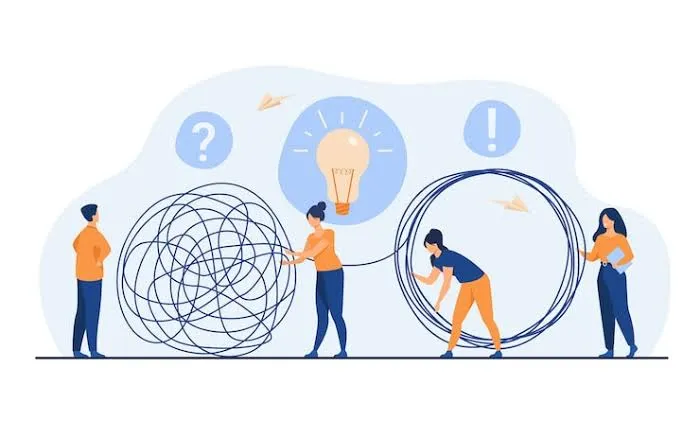
What problem are startup owners usually trying to solve?
Many entrepreneurs think their main problem is getting a website online.
Usually, that is only the first problem.
The bigger questions are:
Will customers understand what I sell?
Can they easily find the right product?
Will checkout be simple?
Can I manage orders without depending on the developer for every small change?
Can the website handle more products and customers as the business grows?
Will search engines be able to understand the website?
These questions should be discussed before development begins.
If the development team only talks about colours, animations, and the number of pages, you may be discussing the wrong things too early.
What should you check before hiring an ecommerce website development company in Delhi?
Do not judge a company only by its portfolio or website design.
Ask how they approach your project.
A useful development process should begin with understanding your business requirements and technical needs. The scope should then be defined before design and development begin. Thaver Tech's web development process, for example, describes requirement analysis, custom design and development, testing, deployment, and post-launch support as separate stages.
You should also ask:
Who will manage the website after launch?
Can your team add or update products?
What happens if you need a new feature later?
How will payment and other third-party integrations be handled?
Will the website work properly on mobile devices?
What testing will be done before launch?
Who will fix bugs after the website goes live?
What is included in maintenance?
Will you have access to your website, hosting, domain, and important accounts?
These questions can save you from problems later.

Why mobile experience matters for an ecommerce startup
Most people will visit your site on a phone through an ad or a shared link. If the mobile site is hard to use, they’ll leave immediately.
An agency telling you a site is "responsive" usually just means the layout adjusts to fit a smaller screen. But that's the bare minimum. A site actually works on mobile when the buttons are easy to tap, the photos load properly, and you can get through checkout without getting annoyed.
When you see "responsive design" listed on a proposal from a dev team like Thaver Tech, ask them how they test it. Are they using actual iPhones and Android phones, or are they just resizing a browser window on their computer screen and calling it done?
What about SEO during ecommerce development?
SEO should be considered while the website is being built, not treated as something to think about after launch.
The website structure, URLs, page titles, product information, headings, internal links, mobile experience, and technical setup can all affect how easily search engines understand your pages.
For example, if you sell different types of products, your category structure should make sense to both customers and search engines.
A product page should also provide enough useful information for someone who has never heard of your business before.
Thaver Tech's web development page states that its development work includes SEO-friendly website structures and SEO practices during development.
That does not mean development alone will automatically make an ecommerce website rank. SEO still requires ongoing work, useful content, technical improvements, and proper targeting after the website is live.

Do you need a custom design?
A startup does not need a complicated design just to look different.
The design should make shopping easier.
Customers should quickly understand:
What the business sells
Which products are available
How much they cost
What makes a product suitable for them
How to buy it
How to contact the business if they have a question
Good ecommerce design often comes down to reducing unnecessary steps.
If customers have to search through confusing menus or click several times to find basic information, a visually attractive website will not solve the real problem.
What should be included in the project proposal?
Never sign a dev contract or wire a single rupee of an advance until they hand you a real, no-BS proposal. You don't need a 40-page PDF full of corporate fluff and technical jargon; you need a clean paper trail of what they're actually building, what’s explicitly not included, and what happens the second the site goes live.
When you look over their scope, dig into the details agencies love to gloss over:
Design: Are they actually building a layout around your business, or are they just slapping your logo onto a $40 template and calling it a day?
Integrations: Exactly which payment gateways, shipping APIs, CRM tools, and tracking pixels are being wired up?
Testing: Who is actually running QA on the checkout flow, or are your first paying customers going to be your unpaid beta testers?
Support: What happens when something breaks three weeks after launch? Is there a warranty window, or do the hourly billing meters turn on instantly?
Ownership (The Big One): Who controls the domain, the hosting, the code files, and the main accounts? You better make damn sure you own the keys. Never let an agency hold your digital storefront hostage because they control the admin login.
A blunt, transparent agreement that tells you exactly what you're getting is worth a thousand pages of agency smoke-and-mirrors.

How much should a startup spend on ecommerce development?
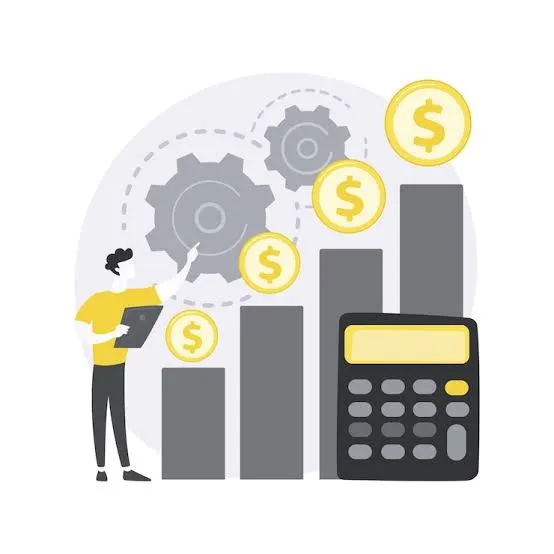
Forget looking for a flat-rate sticker price. Anyone quoting you a fixed number before they even know what you're selling is either guessing or trying to pad their margins.
The cost comes down entirely to structural complexity. A clean, straightforward storefront with a dozen products and a standard checkout is a totally different planet than a heavy custom build with multi-tier product variants, automated inventory logic, ERP integrations, and custom user accounts.
Stop walking into dev shops asking, "What's the absolute cheapest website you can build?" You’ll just end up with junk. Shift the question to reality: "What do I actually need to take payments tomorrow, and what am I going to need six months from now when things pick up?"
Getting that balance wrong leads straight into two expensive traps:
The Overspend Trap: You get talked into a massive, bloated custom platform loaded with enterprise features, custom workflows, and automation you won't even use for the next three years. You're literally paying an agency to build infrastructure for a future business you haven't even grown into yet.
The Cheap Build Trap: You swing the other way, go rock-bottom cheap, and pick a brittle setup that cracks the second you get real traffic or try to add a new category. Six months down the line, when you're trying to scale, you realize the site architecture can't handle it. And you end up paying double to rip the whole thing out and rebuild from scratch.
What should you plan for after the website goes live?
Launching the website is not the end of the project.
Products will change. Prices may change. New categories may be added. Customers may report issues. Payment or third-party services may need updates. You may eventually want new features.
A development company should therefore be able to explain what happens after launch.
Thaver Tech's stated web development process includes post-launch support and maintenance, including updates, bug fixes, security patches, and performance monitoring.
For a startup, this support can be useful because you may not have an in-house developer available for every technical issue.
Can a web development company also help with future growth?
Don’t build a throwaway site that your next developer is going to curse six months from now. Look down the road.
Sure, you're launching lean today with a handful of products. But next quarter you’ll need to drop in new categories, add customer accounts, hook up a CRM, or plug in new payment gateways.
That doesn’t mean you blow your entire seed budget building a bloated mega-site on day one. It just means your core architecture shouldn’t box you into a corner when it’s time to scale.
This is where a shop like Thaver Tech actually makes sense. If they’re doing it right. You want a team that builds clean, leaves room for APIs, and doesn't disappear the second the launch check clears.
For a startup, building a massive custom monster before you even know what your customers actually give a damn about is a quick way to go broke. Build smart, launch lean, and make sure the code can actually grow with you.
Is Thaver Tech suitable for an ecommerce website project?
Every agency has the exact same brochure: custom builds, responsive design, API integrations, SEO architecture, testing, deployment, and monthly support retainers.
Ignore the standard agency menu, custom builds, APIs, SEO, responsive layouts, support retainers.
If you're talking to Thaver Tech, throw their brochure out. Get them on a call and force a real scoping session. What has to launch this week versus what can wait? Which integrations are actually mandatory? Who's picking up the phone when the checkout breaks?
That conversation tells you everything. Mockups and pricing PDFs don't.