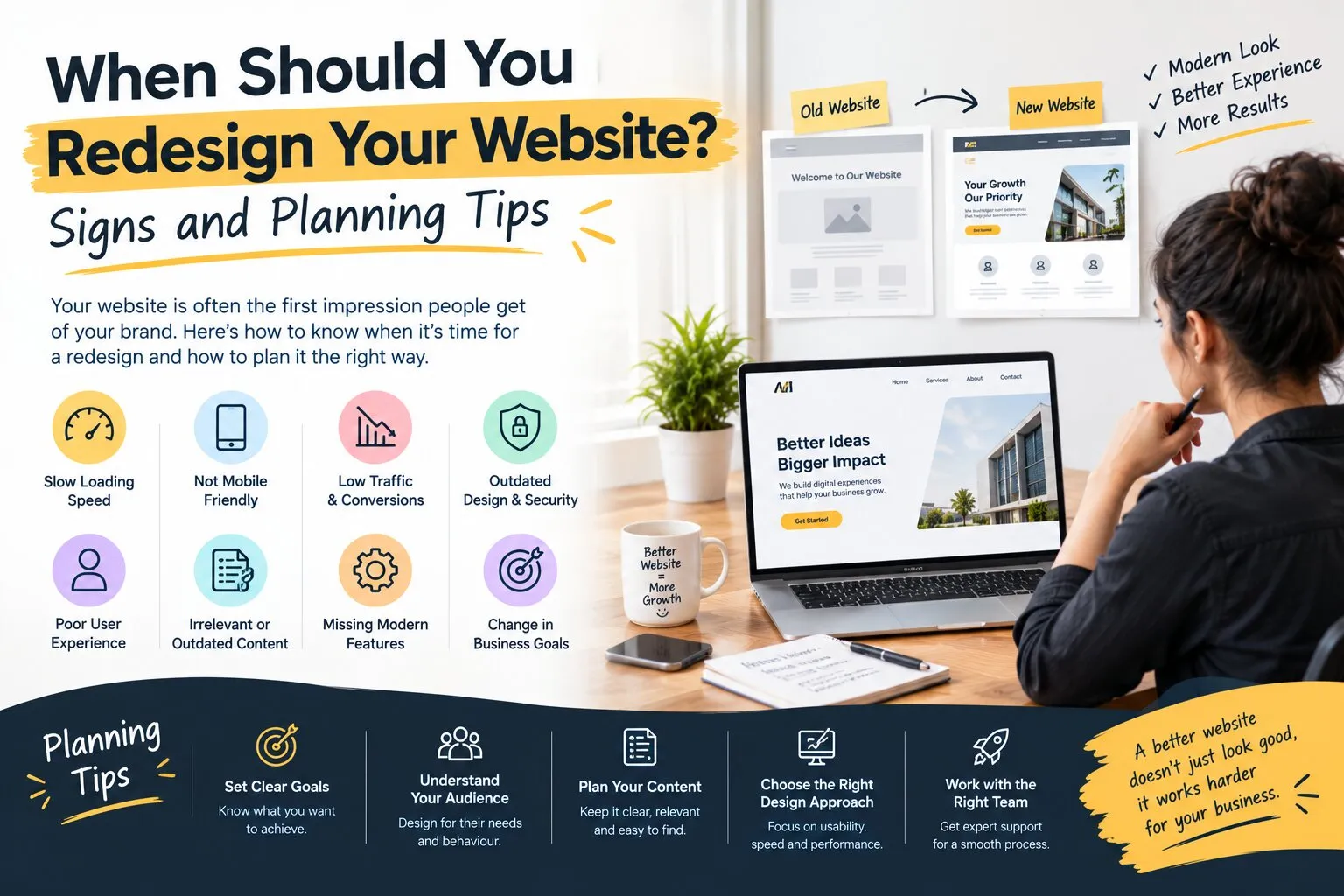
A website redesign becomes necessary when your existing website no longer supports the way your business operates.
This is especially common with established manufacturing companies. A website may have been built years ago when the company had different products, different markets, and different customers. The business may have grown, but the website stayed the same.
You may still be getting enquiries through it, so replacing it can feel unnecessary.
But there is another question worth asking:
How many opportunities could you be missing because the website no longer represents the business properly?
A redesign does not always mean starting everything from zero. Sometimes the structure needs to change. Sometimes the content is outdated. Sometimes the design is the problem. In other cases, the entire website needs to be rebuilt.
The first step is knowing which situation you are dealing with.

How do you know your website has become outdated?
The age of a website alone is not a reason to redesign it.
A five-year-old website can still work well, while a newer website can have serious problems.
Look at how the website performs for actual visitors.
If your website has an old visual design, confusing navigation, outdated company information, poor mobile experience, slow or difficult pages, or makes it hard for customers to understand your products and services, those are stronger reasons to review it.
Manufacturing companies should pay particular attention to product and technical information.
If your website still shows products you no longer manufacture, misses newer product categories, has old brochures, or makes customers search through several pages to understand what you offer, the website is creating unnecessary friction.
Is your website showing what your company is today?
This is one of the biggest reasons established companies need a website redesign.
A company may have started with a few products and gradually expanded into new markets, added manufacturing capabilities, developed new solutions, or changed its positioning.
But the website may still describe the company as it was years ago.
Imagine a manufacturer that now supplies several product categories but has a homepage focused mainly on the product it was known for a decade ago.
A potential buyer visiting the website may never discover the newer products.
That is a missed opportunity.
The website should give a current and accurate picture of the business.

Are customers struggling to find information?
A manufacturing website often contains a lot of information.
Products, specifications, industries served, certifications, applications, brochures, technical documents, company information, contact details, and enquiry forms can all be useful.
The problem starts when everything is simply placed on the website without a clear structure.
A buyer should not have to click through several unrelated pages to find a product specification or understand where a particular product is used.
During a redesign, review the website from the customer's perspective.
Ask someone unfamiliar with the business to find a particular product or piece of information.
If they keep asking, "Where do I find this?", the problem may be the website structure rather than the content itself.
Is your website difficult to use on mobile?
A manufacturing website may be mainly used by procurement teams, distributors, engineers, business owners, or other professional buyers. That does not mean everyone will access it from a desktop computer.
People may first discover your company through a search, email, LinkedIn post, digital campaign, or a shared link on their phone.
If the website was designed primarily for desktop screens years ago, pages may be difficult to read or navigate on smaller screens.
Thaver Tech lists responsive website design as part of its web design services, with websites designed to work across different screen sizes. It also provides website redesign services for businesses with existing websites.
During a redesign, do not simply ask whether the website is "mobile-friendly." Test important pages, product information, menus, forms, documents, and enquiry actions on actual mobile devices.


Are you losing enquiries because contacting you is difficult?
A visitor may be interested in your product but still leave if contacting the company requires too much effort.
Look at your enquiry process.
Can someone quickly find your phone number?
Is the enquiry form easy to complete?
Can a buyer understand what information they should provide?
Is the contact information current?
Are product pages connected to a clear enquiry action?
For a manufacturing company, this matters because visitors may not be ready to buy immediately. They may want a quotation, product specification, technical discussion, sample, distributor information, or a conversation with the sales team.
The website should make that next step obvious.
Has your business changed but your website structure hasn't?
A redesign is often a good opportunity to rethink the website around the current business.
For example, an established manufacturer may now serve several industries. Instead of putting everything under one general "Products" section, the website could make it easier for different buyers to reach the information relevant to them.
A procurement professional may want product details and enquiry options.
An engineer may need technical specifications and documentation.
A distributor may be looking for product categories and contact information.
A potential business partner may want to understand the company's capabilities and experience.
The website does not need to become complicated. It needs to make the right information easier to find.

What impact can an outdated website have on the business?
The effect is not always immediately visible in your accounts.
A website can create small problems that add up.
A customer cannot find the right product.
A distributor does not discover a newer product line.
A potential buyer leaves because the website looks neglected.
A sales employee has to answer questions that could have been explained clearly online.
A visitor cannot easily download the required document.
A search visitor lands on an old page and gets the wrong information.
None of these automatically means the website is losing a specific amount of revenue. But each one represents a possible point where the website is failing to support the business.
That is why redesign should be treated as a business decision, not just a design project.
Should you redesign everything or improve the existing website?
This depends on the condition of the current website.
If the structure, technology, content, and design are all working reasonably well, you may only need selected improvements.
If the website has become difficult to maintain, has a poor structure, cannot support current business requirements, or has major usability problems, a larger rebuild may make more sense.
Do not decide before reviewing the existing website.
A professional web design team should be able to look at the current site and explain what needs to change and what can remain.
Thaver Tech lists website redesign alongside static, dynamic, responsive, and custom website design, which allows redesign to be treated as a separate requirement rather than assuming every existing website needs to be completely replaced.

What should you plan before starting a redesign?
Do not begin with "make the website look modern."
Start with the business.
Write down what has changed since the existing website was built.
Which products have been added?
Which products are no longer relevant?
Which industries do you serve now?
Which markets are important?
What questions do customers repeatedly ask?
Which pages receive enquiries?
Which information does your sales team regularly send to customers?
This information gives the design and development team something useful to work with.
Then decide what the new website needs to achieve.
For a manufacturing company, that could mean making product information easier to access, improving enquiry generation, presenting capabilities more clearly, making technical information easier to find, or giving distributors and buyers a better way to contact the company.
What should you avoid during a website redesign?
Do not redesign only because a competitor has a newer-looking website.
Your competitor's website may have completely different business requirements.
Do not remove useful information simply because the old website contains too much content. Instead, organise it better.
Do not add animations and design effects that make the website slower or harder to use.
Do not change important URLs without considering the SEO impact.
Do not launch the new website before checking forms, links, product pages, documents, mobile layouts, redirects, and other important functions.
And do not assume the project ends when the new website goes live.

How can a redesign create new opportunities?
A well-planned redesign can help you present parts of the business that were previously difficult to discover.
Suppose your company has added a new manufacturing capability but it is buried on an old page.
Or perhaps you serve an industry that is not clearly mentioned anywhere on the website.
Or your company has technical expertise that potential customers simply cannot understand from the current website.
These are not purely design problems. They are communication problems.
A redesign gives you an opportunity to bring those areas forward.
The goal is not to make the website look newer for the sake of appearance. The goal is to make the website more useful to the people you want to reach.
What should you ask a website redesign company?
Before hiring a company, ask how it plans to approach your existing website.
A useful discussion should cover:
What is currently working?
What needs to be changed?
Which pages should be retained?
What new pages are required?
How will the navigation be structured?
How will mobile users experience the website?
What happens to existing URLs and search visibility?
How will forms and enquiries be tested?
Can your team update content after launch?
What support is available after the redesign?
Thaver Tech states that its design services include website maintenance, content changes, data backup, browser compatibility checks, and website security audits through its AMC offering.
These are useful areas to discuss because an established company's website is rarely a one-time project. It will continue to need updates as the business changes.

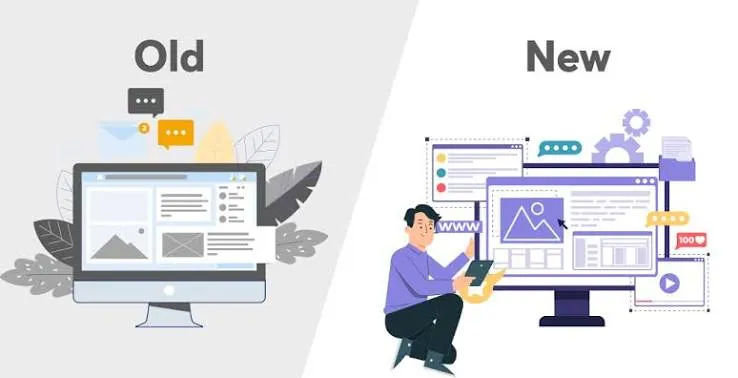
A website redesign should prepare the business for the next few years
An established company should not redesign its website only to fix what looks old today.
Think about what the website will need to support as the company continues to grow.
New products may be added. New industries may become important. More enquiries may come through the website. Marketing campaigns may send visitors to specific landing pages. Customers may expect better access to product information.
You do not have to build every possible feature immediately.
But the new website should have a structure that can be maintained and expanded without creating the same problems again.
That is where proper planning matters more than simply choosing a modern template.
So, when should you redesign your website?
If the website no longer represents the current business, makes important information difficult to find, performs poorly on mobile devices, creates unnecessary barriers to enquiries, or cannot support the way the company now operates, it is worth reviewing.
You may not need a complete rebuild.
You may need a redesign of selected sections, better navigation, updated content, improved responsive design, or a more suitable technical setup.